



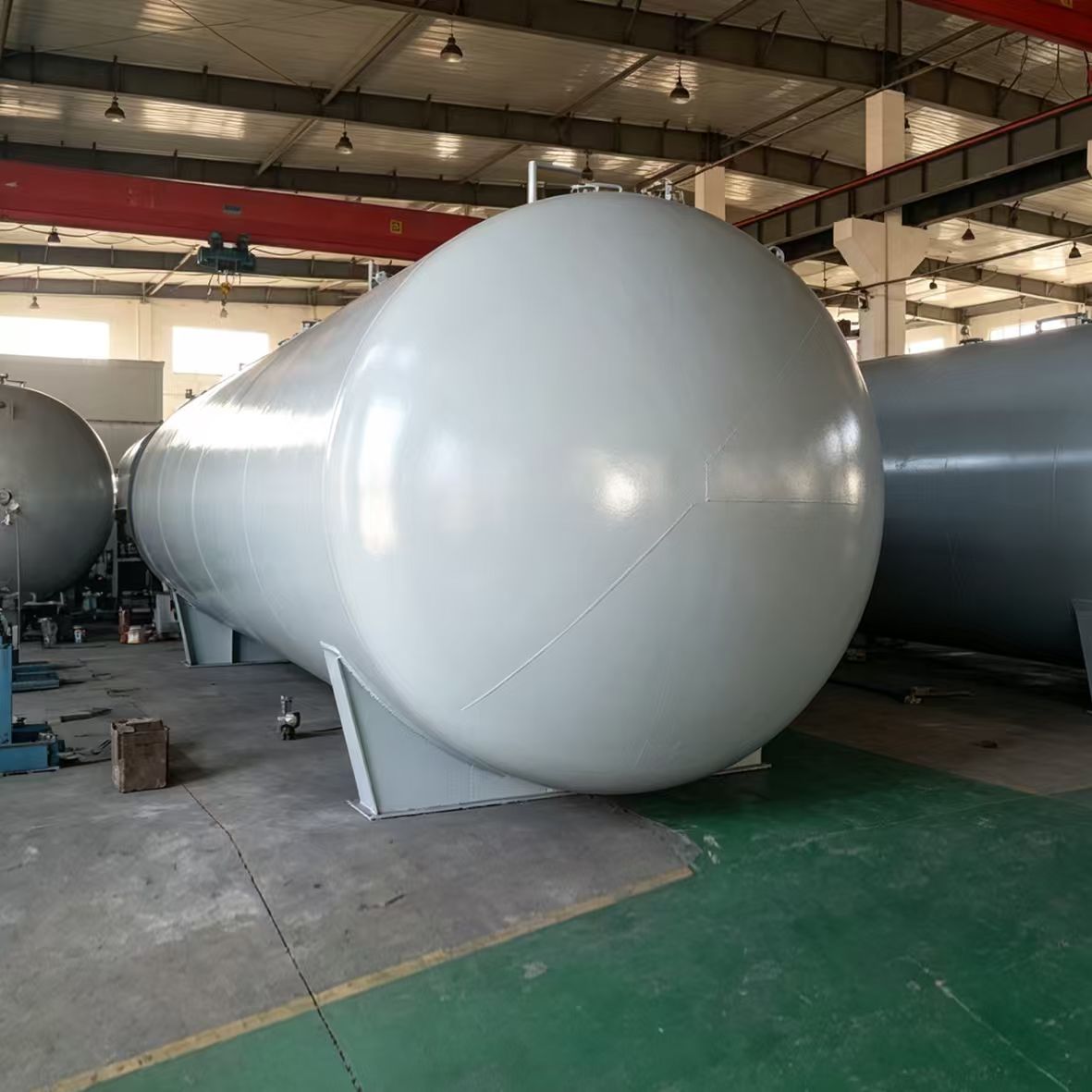
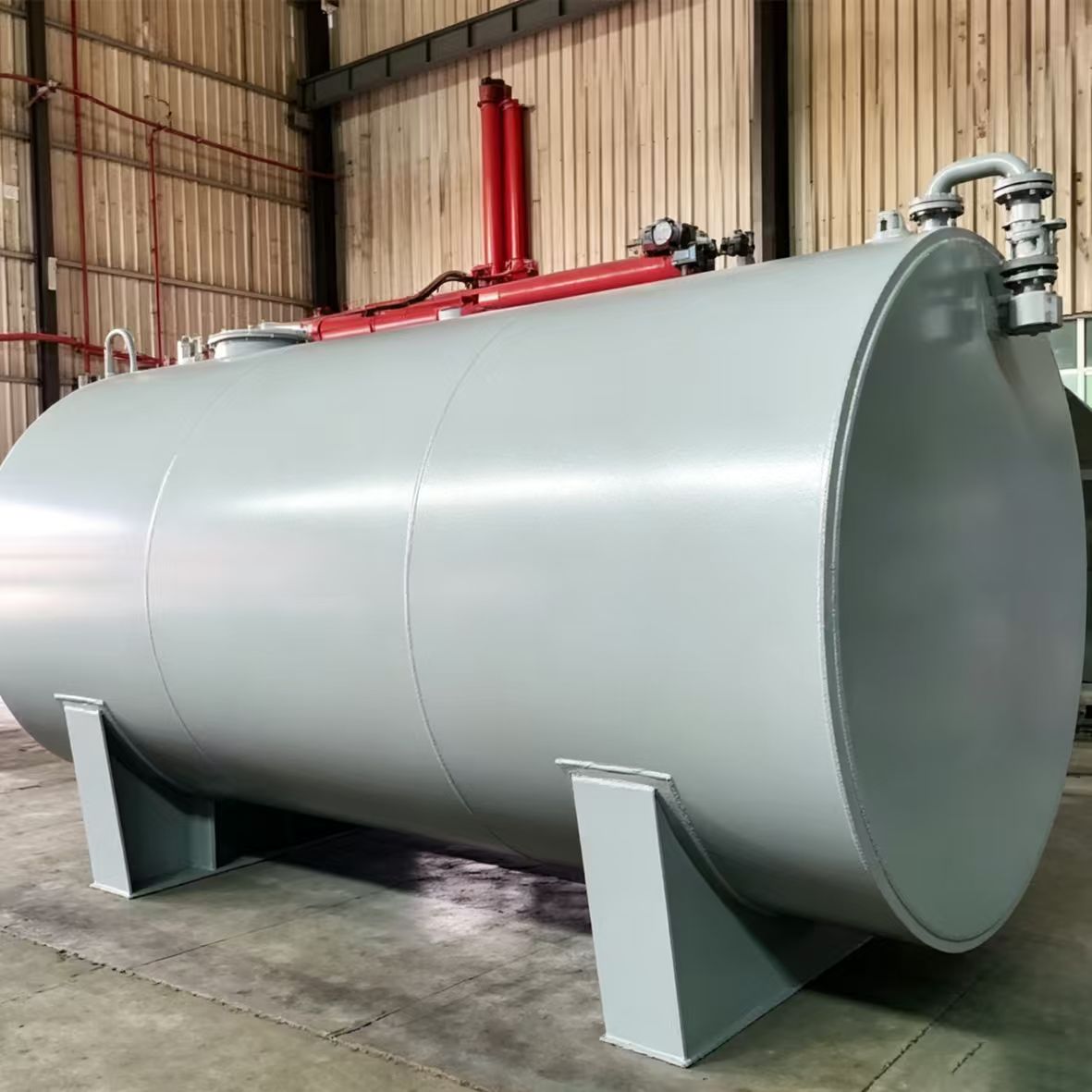
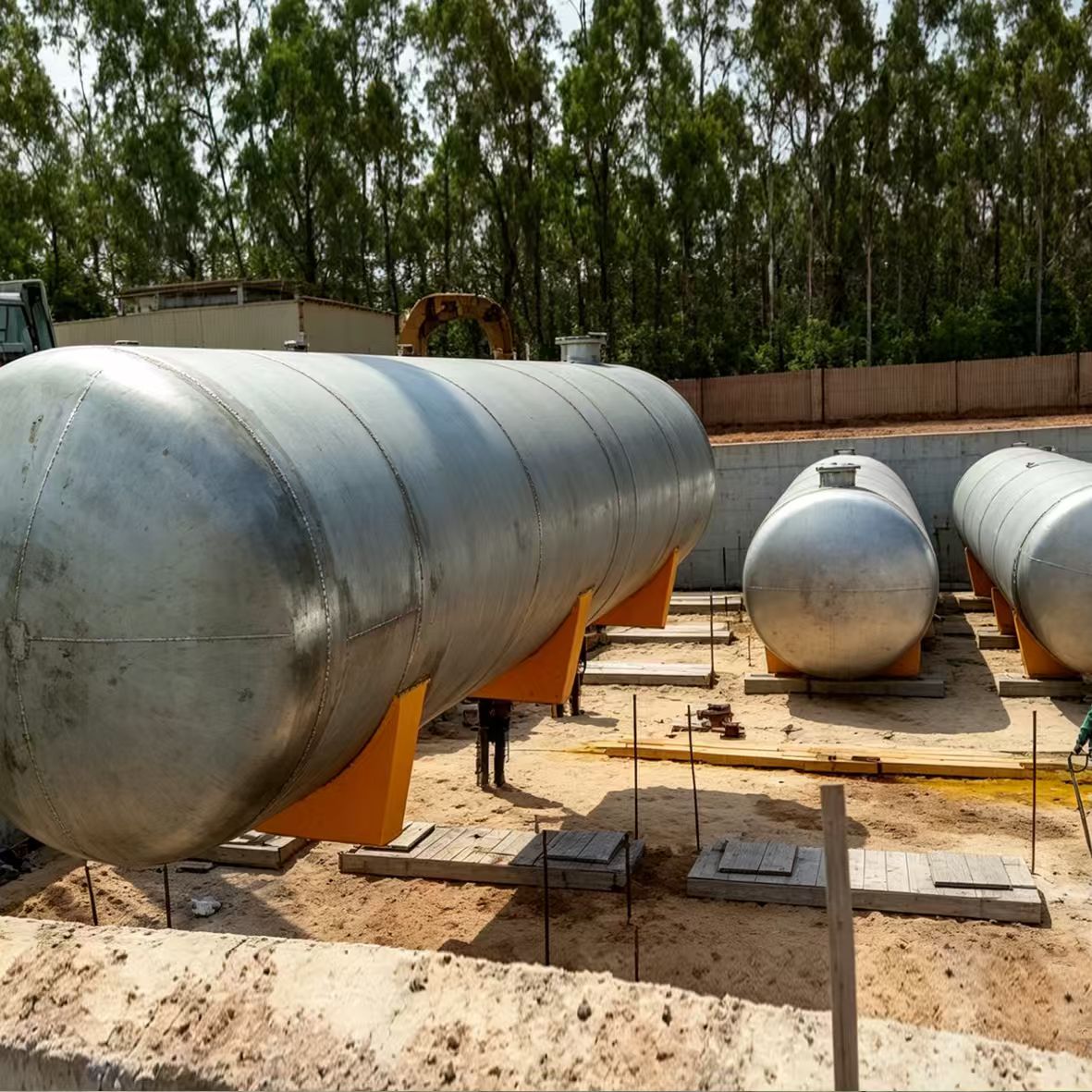
Horizontal Atmospheric Tank
Tank forming equipment: plate bending machine, head stamping / spinning equipment Welding equipment: automatic submerged arc welding machine, gas shielded welding machine Testing equipment: X-ray flaw detector, ultrasonic flaw detector, hydraulic pressure test equipment Supporting accessories: breather valve, flame arrester, magnetic level gauge, quick coupling Anti-corrosion equipment: sandblasting and derusting equipment, electrostatic spraying equipment, anti-corrosion coating line
Structural design and strength verification technology for atmospheric pressure vessels Quality control technology for automatic steel plate welding and non-destructive testing Long-acting anti-corrosion coating and medium corrosion resistance technology Anti-seepage and anti-leakage structural design technology for underground storage tanks Skid-mounted integrated design technology Anti-static, lightning protection and explosion-proof safety design technology
Product Introduction
Types and Characteristics of Equipment
Type
Equipment Type and Characteristics
Horizontal crude oil storage tank Finished product storage tank (diesel oil, gasoline, kerosene) Sewage / oily sewage storage tank Atmospheric pressure storage tank for chemical additivesFeatures
Product Features
Simple structure and small footprint, suitable for use in oilfields, gas stations and transfer stations. Delivered as a complete unit with fast on-site installation, and can be transported in containers, making it ideal for overseas export. Designed for atmospheric pressure (generally ≤0.1MPa), with high safety factor and easy operation and maintenance. Can be equipped with insulation and tracing devices to adapt to low-temperature environments in Russia and high-temperature environments in the Middle East. Excellent anti-corrosion performance: sandblasted anti-corrosion treatment on the outer wall, and oil-resistant anti-corrosion coating available on the inner wall. Standardized interfaces, allowing flexible configuration of oil inlet/outlet, liquid level measurement, sewage discharge and safety accessories. Stable operation with no high-pressure risks, suitable for long-term continuous storage of crude oil and refined oil products.
Horizontal Atmospheric Tank
A storage tank is a sealed container used to store crude oil, diesel, gasoline and other petroleum products.
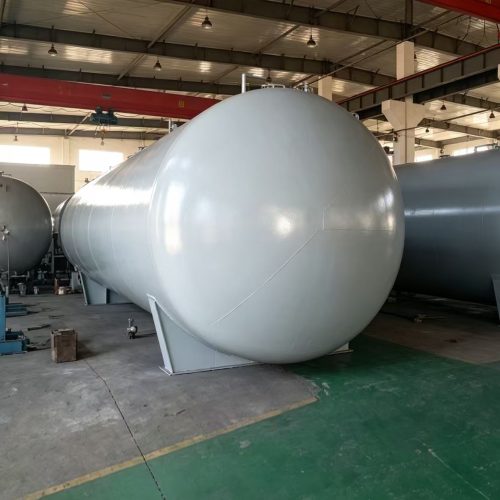
Horizontal Atmospheric Tank
It features safe sealing, corrosion resistance and stable performance to prevent oil leakage and volatilization.
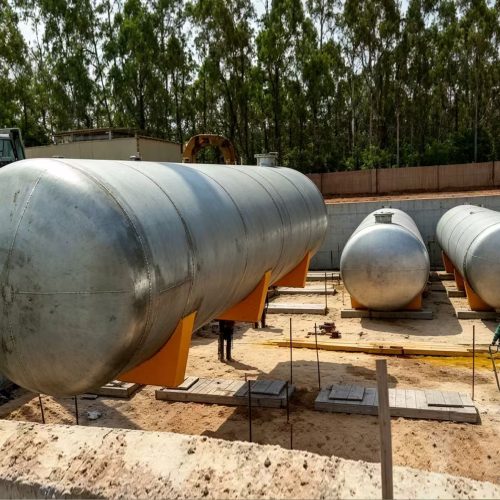
Horizontal Atmospheric Tank
Widely used in oilfields, refineries, terminals and fuel supply stations.
Basic Principles and System Composition
Basic Working Principle
Horizontal atmospheric pressure storage tanks store liquid media such as crude oil and refined oil products in a closed tank space under near-atmospheric pressure. Stable storage is achieved through liquid level control, pressure balance, and safe ventilation, preventing volatilization, leakage, static accumulation and ingress of external impurities, so as to ensure safe oil storage and stable quality.
Overall System Composition
Tank main body: cylinder, elliptical head / dished head, reinforcement rings Support structure: saddle supports, anchor bolts, shock absorption and fixing devices Pipeline system: oil inlet, oil outlet, sewage drain, overflow port, sampling port Safety accessory system: Breather valve / vent valve (maintains pressure balance inside and outside the tank) Flame arrester (prevents flashback and ignition by external fire sources) Static electricity protection device, lightning protection grounding Monitoring and metering system: liquid level gauge, level scale, thermometer, manhole / inspection hole Anti-corrosion and protection system: external anti-corrosion coating, internal oil-resistant anti-corrosion layer, anti-seepage layer for underground tanks
Basic Principles and System Composition
Oil Filling Procedure
Inspect the tank body, valves, instruments and safety accessories (breather valve, flame arrester) to ensure they are in good condition. Open the feed valve and start oil filling via oil transfer pump or gravity flow. Monitor the liquid level in real time; overfilling beyond the safe liquid level is strictly prohibited. Upon completion of oil filling, close the feed valve, seal the connectors, and make relevant records.Storage Monitoring Procedure
Regularly check the liquid level, temperature and any leakage of the tank. Verify that the breather valve, flame arrester, grounding and static protection devices are functioning properly. For underground tanks, inspect the manhole and valve chamber; in winter, check the insulation and heat tracing system.Oil Discharge / Transfer Procedure
Inspect the condition of the discharge pipeline, valves and transfer pump. Open the discharge valve, start the oil transfer pump, control the flow rate and monitor the liquid level (not lower than the minimum safe liquid level). Upon completion of transfer, stop the pump and close the valves, record the oil discharge volume and transfer destination.Maintenance and Cleaning Procedure
Drain the medium completely, ventilate and replace the air inside the tank, and ensure the concentration of flammable gas in the tank meets the safety standard. Open the manhole, clean and remove scale, inspect the inner wall for corrosion and check the condition of welds. Repair valves, instruments and safety accessories; conduct hydrostatic test / air tightness test after sealing the manhole. Put the tank into standby after passing acceptance inspection.
Multilingual Support
Multilingual professional foreign trade support

One-stop Logistics
Full logistics, customs clearance & shipping arrangement.

Complete Export Docs
Complete export documentation: inspection reports,etc.

On-time delivery excellence
Guaranteed punctual delivery via efficient production & logistics management.

After-sales & Tech Support
Timely after-sales & technical support for overseas clients.