



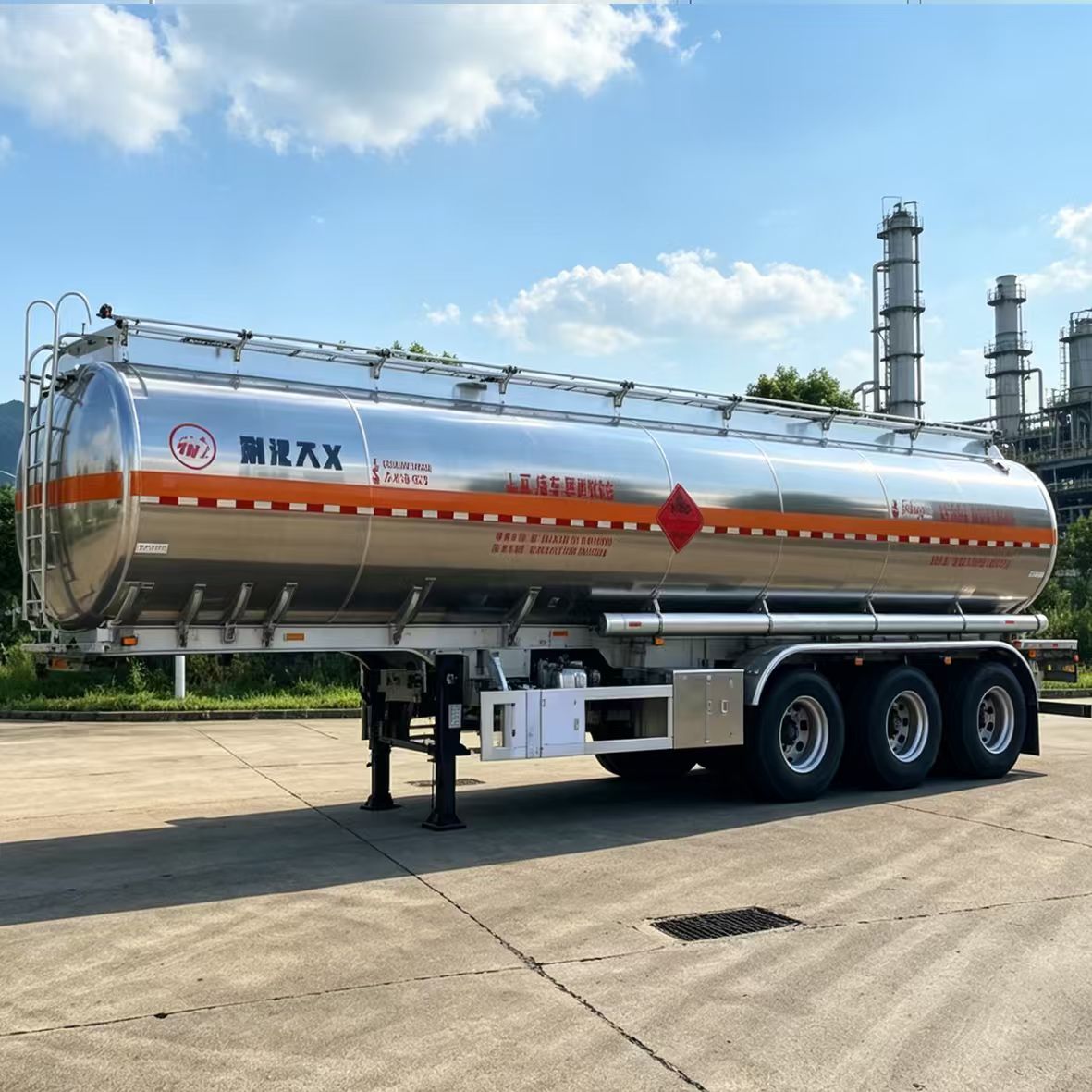
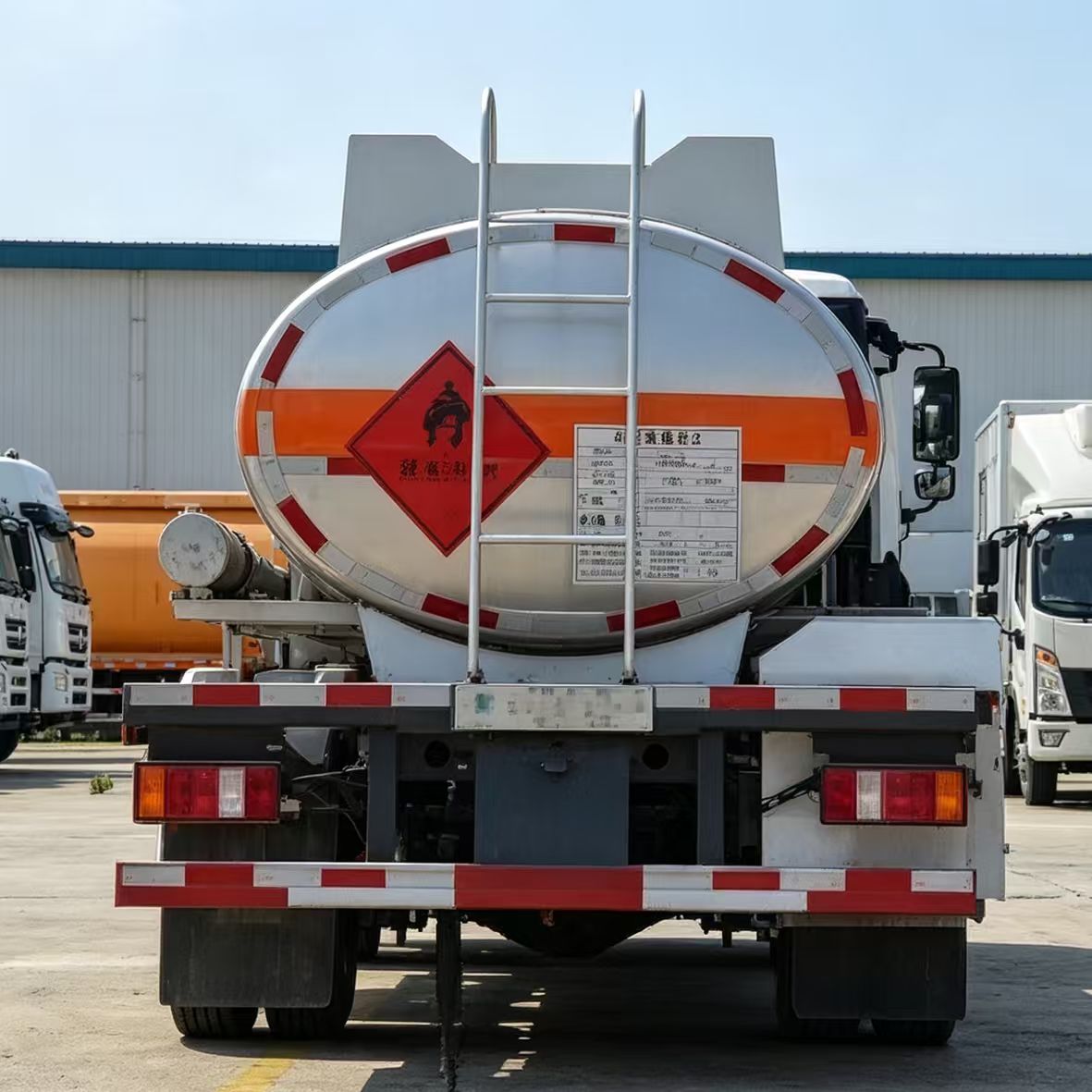
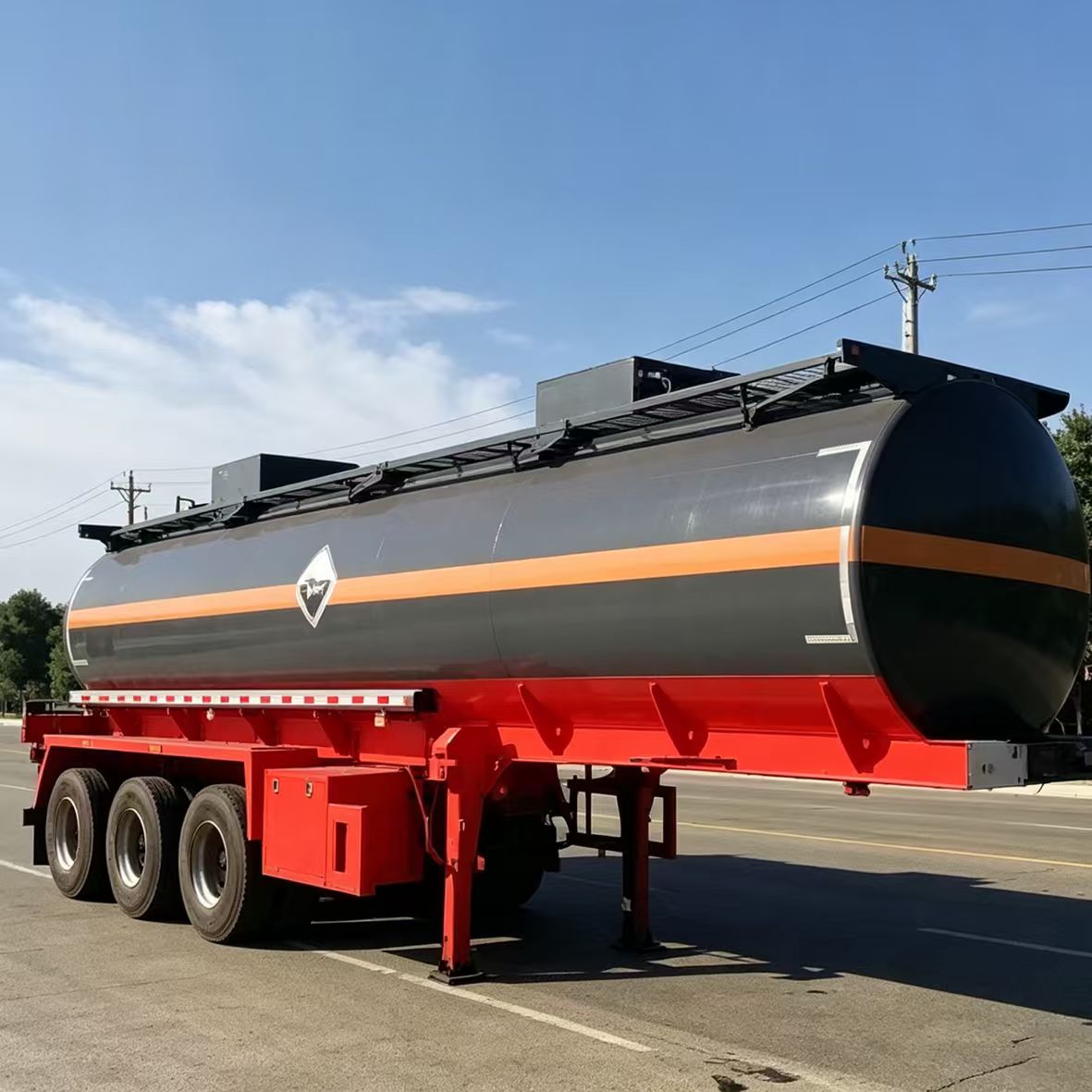
Tank semi-trailer
Translation
Subsea Valve (Emergency Shut-off Valve):Can quickly cut off the oil circuit in case of emergency to prevent leakage and deflagration, complying with international standards for hazardous chemicals transportation. Anti-Sloshing Baffles:Evenly distributed inside the tank to reduce oil sloshing and center of gravity offset, improve stability during driving, braking and turning, and prevent rollover. On-Board Self-Priming Oil Pump:Driven by power take-off (PTO), with high self-priming and self-discharging efficiency (20–50 m³/h). Suitable for various refined oil products, not easy to clog, and easy to maintain. Static Grounding Alarm:Grounding connection is required before loading and unloading. It monitors the grounding status; an alarm will be triggered and operation locked if poor grounding is detected, eliminating static hazards. Anti-Overflow Sensor:Installed inside the manhole cover. It gives audible and visual alarm when the oil level reaches 95% to prevent oil overflow. High-Precision Flow Meter:Used for trade metering with an error ≤ 0.5%. Supports printing and recording to meet handover and international trade requirements. Vapor Recovery Unit (High-End Configuration):Recovers volatile oil vapor for environmental protection and loss reduction. Complies with environmental regulations in the Middle East and EU, and is essential for high-end export models.Integral Forming Technology for Aluminum Alloy Tank Body:Adopting CNC welding for integral forming, featuring strong tightness and high strength. The lightweight design reduces fuel consumption and increases load capacity, making it suitable for the high-end market in the Middle East. Integrated Anti-static and Explosion-proof Technology:Conductive tank body equipped with static protection and explosion-proof designed components, complying with ADR and EAC certifications, suitable for the transportation of flammable and explosive materials. Multi-compartment Independent Control Technology:Each compartment is sealed independently with separate oil inlet and outlet, allowing simultaneous transportation of multiple grades of oil products and independent loading and unloading, improving transportation flexibility. Low-temperature Environment Adaptation Technology:The tank body is equipped with an insulation layer and heating coil, preventing diesel oil from solidifying at -40℃, suitable for cold markets in Russia and Central Asia. International Certification Adaptation Technology:Compliant with standards such as ADR, EAC/GOST, SASO and CCC, enabling direct export without additional modification.
Product Introduction
Types and Characteristics of Equipment
Type
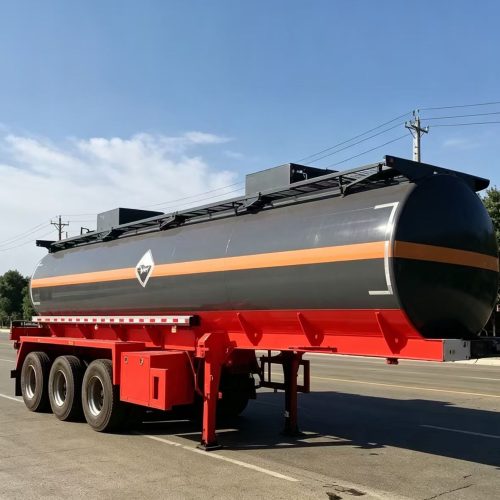
Semi-trailer oil tank trucks are mainly designed for large volume, long haul trunk transportation of refined oil products, including gasoline, diesel oil and kerosene. Relying on the flexibility and large capacity advantages of the semi trailer structure, they serve as the core transportation carrier from oil depots and refineries to gas stations and end users. Carbon steel tank body features high strength, low cost, outstanding cost performance and strong impact resistance, adapting to complex road conditions. It is suitable for transporting low corrosiveness refined oil products such as diesel oil and kerosene, meeting cost effective requirements.
Features
Volume ranges from 30–60m³, with mainstream capacities of 40–50m³, featuring large single-trip transport volume and high long-distance operation efficiency.The semi-trailer design allows flexible replacement of tractors, reducing operating costs and suitable for long-haul trunk transportation.Fully compliant with hazardous chemicals transportation standards, equipped with complete explosion-proof, anti-static and anti-leakage devices.Can meet international certifications including ADR, EAC, GOST and SASO, adapting to road conditions and regulations in overseas markets such as the Middle East, Russia and Tanzania.
Tank semi-trailer
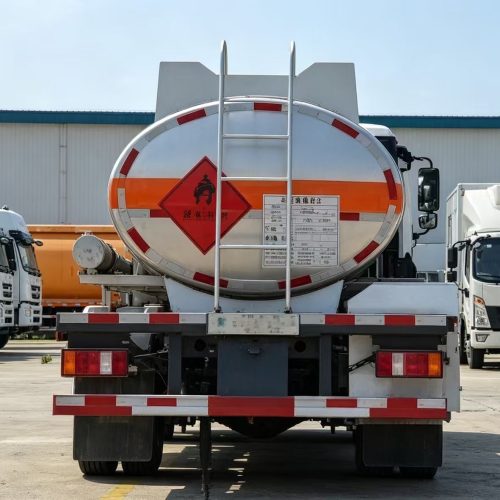
A fuel tank truck is a special vehicle used for transporting oil products such as gasoline, diesel and crude oil.
Tank semi-trailer
It features a sealed tank body, safety valves and anti-static devices to ensure safe transportation.
Tank semi-trailer
Widely used in oil depots, gas stations and petrochemical logistics.
Basic Principles and System Composition
Basic Working Principle
Based on a semi-trailer chassis, the semi-trailer oil tank truck realizes safe storage of oil products through a sealed tank. Powered by a tractor unit, it drives the on-board oil pump via a power take-off (PTO), and completes the loading and unloading of refined oil products with the pipeline and valve system. Throughout the process, safety devices such as anti-static systems, anti-overflow protection, emergency shut-off valves and vapor recovery units are applied to control safety risks of flammable and explosive media, enabling large-capacity, long-distance and safe transportation of oil products from oil depots and refineries to terminal stations.
Overall System Composition
Semi-Trailer Travel & Load-Bearing System (Core Load and Travel)
Core Components: Frame, 2–3 axles (3 axles mainstream), suspension, braking system (with ABS), fifth wheel kingpin, landing legs, heavy-duty tires. Function: Bears the tank body and refined oil products, ensures stable long-distance driving, and stabilizes the vehicle to prevent tilting during parking.Tank Sealing System
Core Components: Elliptical / circular tank body (aluminum / carbon steel), wave breakers, compartment baffles, sealed manhole covers, insulation layer (for low-temperature environments). Function: Seal and store oil to prevent leakage, reduce oil sloshing, realize separate storage of different grades of oil products, and facilitate tank inspection and cleaning.Refined Oil Transportation System
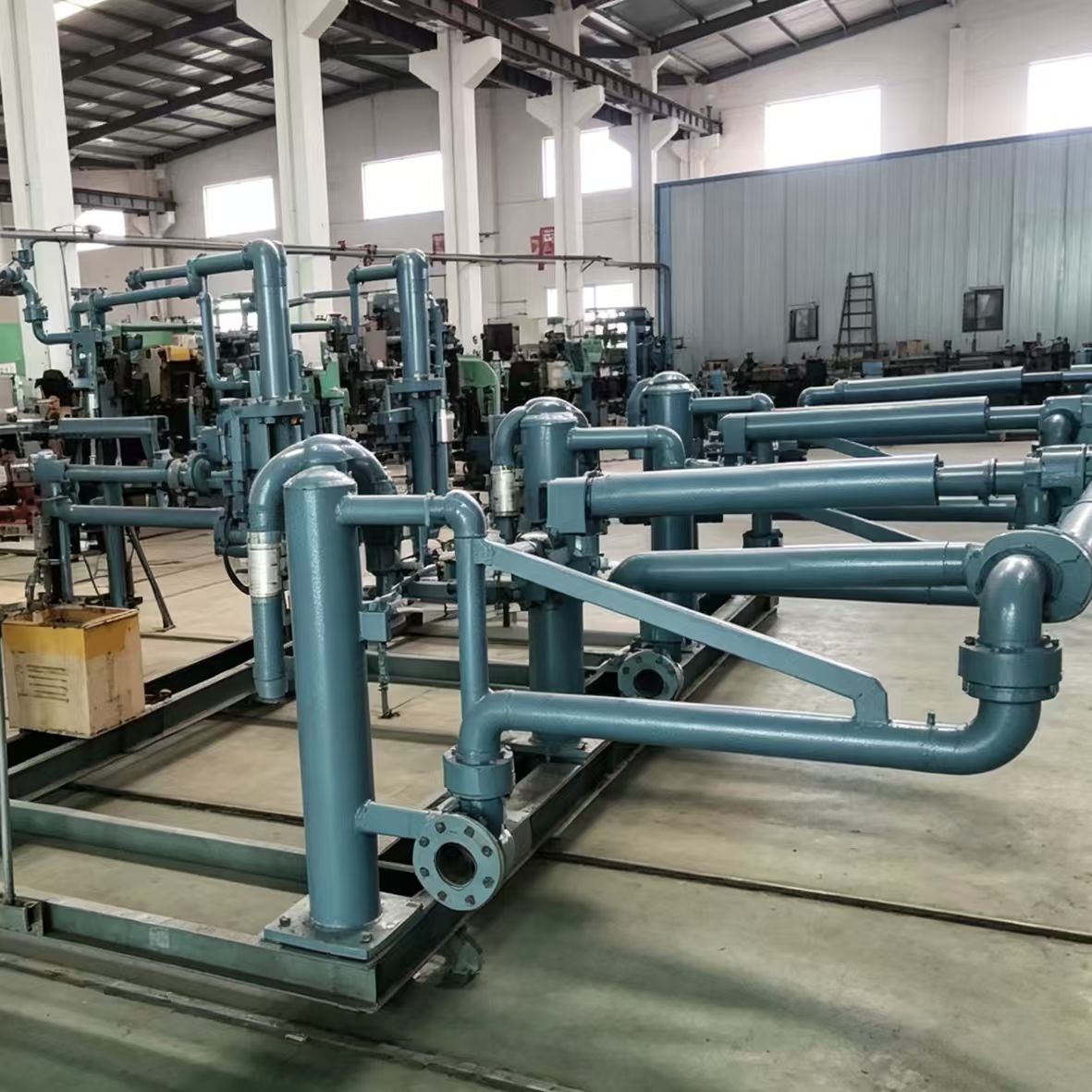
Core Components: On-board self-priming and self-discharging oil pump, power take-off (PTO), oil inlet and outlet pipelines, three-way ball valve, subsea valve, unloading hose.Function: Drive the oil pump to realize oil loading and unloading, control the flow direction and rate, and ensure the safety of the oil circuit.Metering and Control System
Core Components: High-precision flow meter for trade metering, level gauge, valve control handle, instrument console.Function: Accurately measure oil volume, monitor liquid level in real time to prevent overfilling, and centralize control to improve operation convenience.Safety Protection System
Core Components:Static grounding alarm, anti-overflow sensor, fire extinguisher, emergency shut-off device, vapor recovery port, warning signs. Functions:Eliminate static electricity, prevent overflow and leakage, cut off risk sources, and meet warning requirements for hazardous chemicals transportation.Basic Principles and System Composition
Operation Procedures
The core operations are divided into three stages: loading, transportation, and unloading, in strict compliance with hazardous chemicals transportation regulations to eliminate potential safety hazards. Details are as follows:Oil Loading Operation (At Oil Depot – Focus on Anti-Overflow & Anti-Static)
Vehicle Parking: Park steadily in the designated area of the oil depot, lower the landing legs, apply the parking brake, shift to neutral, and turn off the engine. Safety Preparation: Connect the static grounding wire (alarm shows green), inspect safety devices, wear anti-static protective equipment; open flames are strictly prohibited. Pipeline Connection: Open the oil filling port, connect the oil depot hose, and confirm a tight seal. Start Loading: Open the inlet valve of the corresponding compartment, start the oil pump, and have the operator on duty for full-time observation. Stop Loading: Immediately stop the pump and close the valve when the alarm activates or the liquid level reaches 95%. Final Inspection: Disconnect the hose, seal the interface, remove the grounding wire, and drive away only after confirming no leakage.In-Transit Transportation (Long-Haul Trunk Roads – Focus on Anti-Leakage & Stable Driving)
Route Planning: Drive along the designated route, avoid sensitive areas; speeding and fatigued driving are strictly prohibited. Driving Requirements: Maintain smooth driving, avoid harsh maneuvers; open flames, smoking, and phone calls while driving are strictly forbidden. Regular Inspection: Stop every 2 hours to inspect the tank, pipelines, tires, etc., and keep records. Emergency Handling: In case of abnormality, park in a safe area, close the emergency shut-off valve, set up warning signs, and contact professional personnel for disposal.Oil Unloading Operation (At Gas Station / Terminal – Focus on Anti-Static & Anti-Mixed Oil)
Vehicle Parking: Park in the unloading area, secure the vehicle, turn off the engine, set up warning signs, and clear unrelated personnel. Safety Preparation: Connect the grounding wire, inspect hoses and valves, and wear protective equipment. Pipeline Connection: Connect and securely seal the hoses, open the valves of the corresponding compartment and the subsea valve. Start Unloading: Engage the power take-off to drive the oil pump for unloading, with full-time on-duty observation. Stop Unloading: Stop the pump and close the valves when unloading is completed or the receiving tank is full. Final Cleanup: Purge residual oil, disconnect hoses, seal interfaces, drive away after confirming no leakage, and complete records.Routine Inspection & Maintenance (Essential After Operation)
Conduct a comprehensive post-operation inspection: clean the tank body, check valves, pipeline seals, and safety devices. Inspect the oil pump and power take-off, and apply lubricating oil. Perform regular rust removal and anti-corrosion treatment on the tank to extend its service life.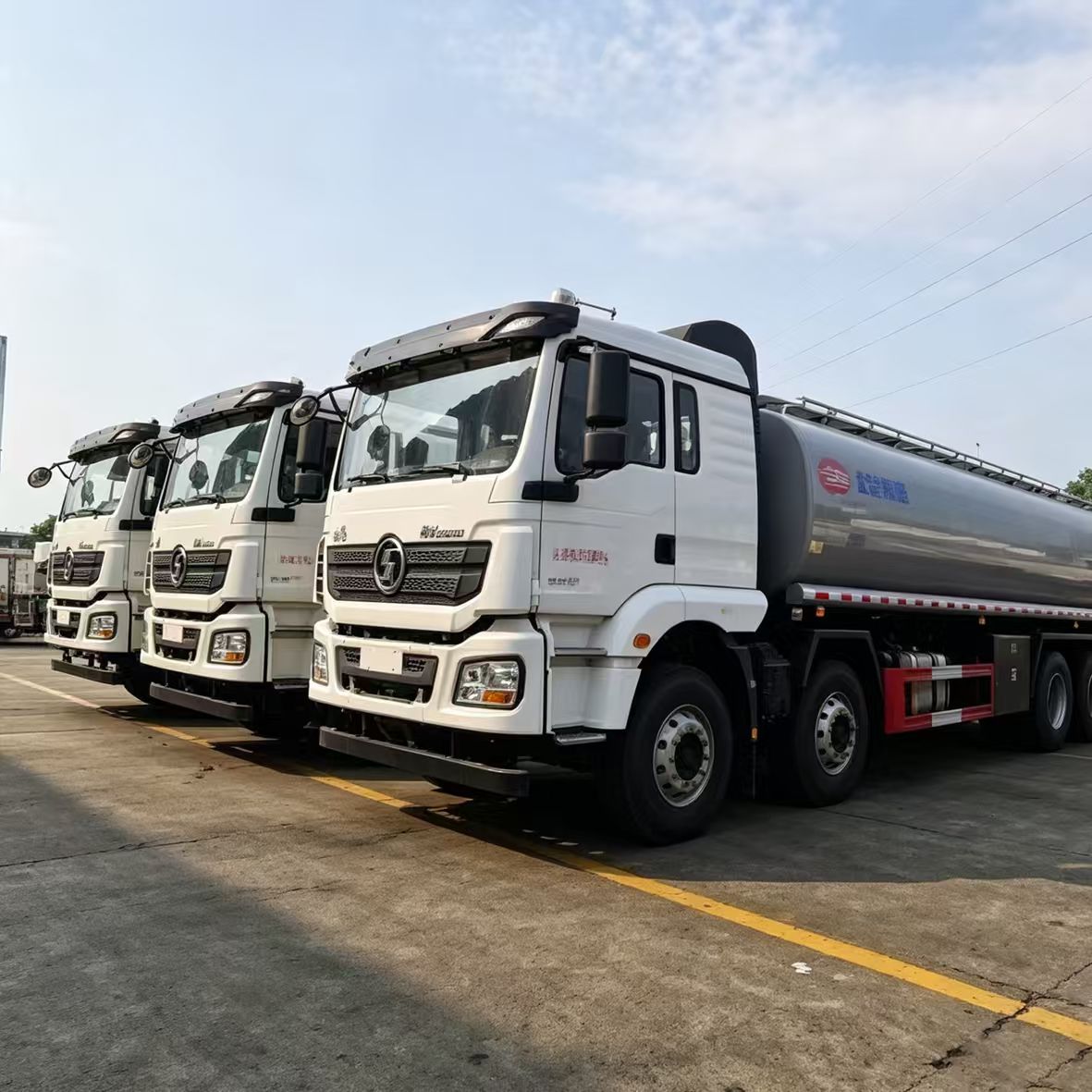

Multilingual Support
Multilingual professional foreign trade support

One-stop Logistics
Full logistics, customs clearance & shipping arrangement.

Complete Export Docs
Complete export documentation: inspection reports,etc.

On-time delivery excellence
Guaranteed punctual delivery via efficient production & logistics management.

After-sales & Tech Support
Timely after-sales & technical support for overseas clients.