



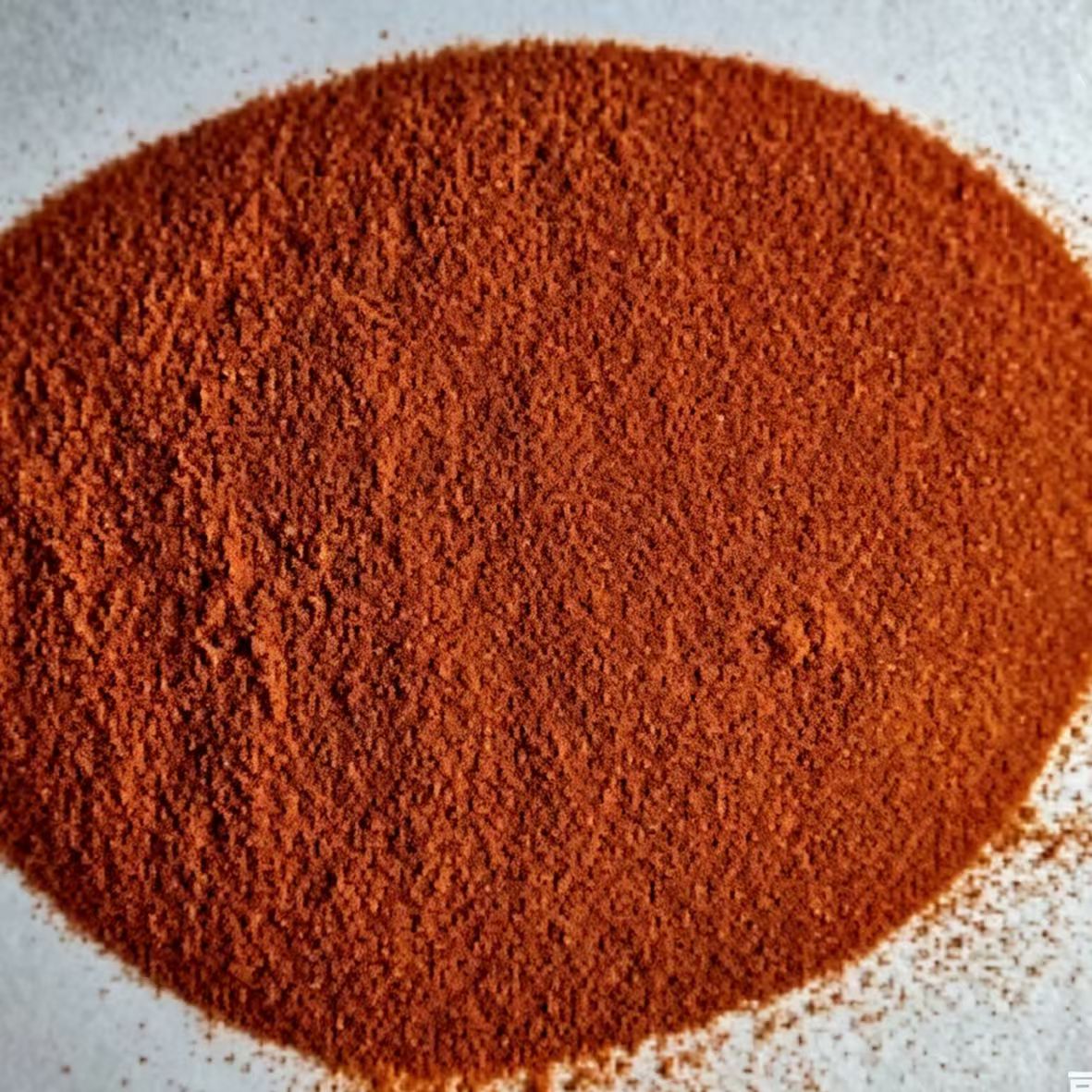
Ferrocene crystal
The core equipment of ferrocene crystal production is closely related to each system unit, focusing on realizing synthesis, purification and quality control, including:
Raw material pretreatment: Depolymerization reactor
Anhydrous and oxygen-free synthesis: Synthesis autoclave, nitrogen supply system
Solid-liquid separation: Centrifuge, filter
Purification & solvent recovery: Vacuum sublimator, distillation column
Post-treatment & detection: Vacuum dryer, gas chromatography, melting point analyzer
Auxiliary equipment: Vacuum unit, temperature/pressure control system
The core technology of ferrocene crystal production focuses on ensuring product purity, stability and production efficiency, mainly including 4 key technologies:
Anhydrous and Oxygen-Free Synthesis Technology: Under nitrogen protection, the reaction environment is strictly controlled to avoid the influence of water and oxygen on the reaction, ensuring high conversion rate and stable product structure.
Vacuum Sublimation Purification Technology: Utilizing the easy sublimation property of ferrocene, temperature-controlled sublimation and desublimation crystallization are adopted to effectively remove impurities, so that the product purity reaches 99% and above.
Solvent Recovery & Closed Circulation Technology: Through the distillation recovery system, the organic solvent used in the reaction is recycled, reducing resource consumption and meeting environmental protection requirements.
Precision Process Control Technology: Intelligent control of temperature, pressure, feeding ratio and reaction time in each link ensures stable batch performance and adapts to large-scale industrial production.
Product Introduction
Ferrocene crystal is a high-purity organometallic compound with a unique sandwich structure, whose chemical formula is Fe(C₅H₅)₂. It appears as orange needle-like or flaky crystals, with a camphor-like odor, easy sublimation, insoluble in water and highly soluble in organic solvents such as benzene, ether and gasoline. It has excellent thermal stability, chemical inertness and redox properties, and is widely used in petroleum, chemical industry, catalysis, materials and other fields. The product is produced through precise synthesis and high-purity purification processes, with stable quality and reliable performance.
Types and Characteristics of Equipment
Type
It belongs to the category of petrochemical products, specifically fine chemicals in organometallic compounds, which is different from common petroleum products such as lubricating oils and solid petroleum products, and is mainly used as a key raw material and additive in industrial production.
Features
Structural Feature: Unique sandwich structure, with an iron atom sandwiched between two parallel cyclopentadienyl rings, stable electron configuration (conforming to the 18-electron rule).
Physical Feature: Orange crystalline solid, camphor-like odor, melting point 172–174°C, boiling point 249°C, easy to sublimate above 100°C, good solubility in organic solvents.
Chemical Feature: High thermal stability (stable up to 400°C), chemical inertness, resistance to air, water, dilute acids, alkalis and UV radiation, reversible oxidation performance, and easy functional modification of cyclopentadienyl rings.
Quality Feature: High purity (up to 99% and above), stable batch performance, low toxicity, safe and environmentally friendly in use.

Ferrocene crystal
Ferrocene is a versatile additive used for fuel smoke suppression and combustion support, rocket propellant burning rate control, and polymer modification. It comes in 25kg standard packaging with reliable quality assurance.
Basic Principles and System Composition
Basic Working Principle
The production of ferrocene crystal is based on the cyclopentadienyl metal coordination reaction. First, cyclopentadiene dimer is depolymerized into monomeric cyclopentadiene under heating conditions. Then, under anhydrous and oxygen-free environment (protected by nitrogen), monomeric cyclopentadiene reacts with ferrous chloride and alkali in an organic solvent to form ferrocene with a unique sandwich structure. Finally, the crude product is purified by vacuum sublimation and other technologies to obtain high-purity ferrocene crystal, and the organic solvent is recycled through distillation to realize green and efficient production.
Overall System Composition
The production system of ferrocene crystal is composed of 5 core units, which correspond to the operation steps one by one, ensuring the smooth progress of the whole production process:
Raw Material Pretreatment Unit
English: Core equipment: Depolymerization reactor. Function: Realize the depolymerization of cyclopentadiene dimer into monomer; complete the preparation and pre-treatment of ferrous chloride, alkali raw materials and organic solvents to meet the reaction requirements.
Anhydrous and Oxygen-Free Synthesis Unit
English: Core equipment: Synthesis autoclave, nitrogen supply system. Function: Provide anhydrous and oxygen-free environment through nitrogen protection; control temperature, pressure and feeding ratio to complete the synthesis reaction of crude ferrocene.
Solid-Liquid Separation Unit
English: Core equipment: Centrifuge, filter. Function: Separate the crude ferrocene solid from the reaction waste liquid, collect the solid crude product, and lay the foundation for subsequent purification.
Purification & Solvent Recovery Unit
English: Core equipment: Vacuum sublimator, distillation column. Function: Purify the crude product through temperature-controlled sublimation and desublimation crystallization to obtain high-purity ferrocene crystal; recover organic solvents through distillation for recycling, reducing production costs and environmental pollution.
Post-Treatment & Detection Unit
English: Core equipment: Vacuum dryer, gas chromatography, melting point analyzer. Function: Vacuum-dry the purified crystalline product to remove moisture and residual solvent; detect the purity of the product to ensure it meets the standard, and then package and store it.
Basic Principles and System Composition
Raw Material Pretreatment: Feed cyclopentadiene dimer into the depolymerization reactor for heating depolymerization to obtain cyclopentadiene monomer; prepare ferrous chloride, alkali raw materials and organic solvents simultaneously.
Anhydrous and Oxygen-Free Synthesis: Pass nitrogen into the synthesis autoclave to remove air and moisture, add monomer, ferrous chloride, alkali and solvent in proportion, and control temperature for reaction to generate crude ferrocene.
Solid-Liquid Separation: Separate crude products from reaction waste liquid by centrifuge or filter, and collect solid crude products.
Purification Treatment: Send crude products into vacuum sublimator for temperature-controlled sublimation and desublimation crystallization; recover solvents through distillation column for recycling.
Post-Treatment and Detection: Vacuum-dry the crystalline products, test purity by gas chromatography and melting point analyzer, and package and store after qualification.
Related products
Original price was: $18,500.00.$15,500.00Current price is: $15,500.00.

Multilingual Support
Multilingual professional foreign trade support

One-stop Logistics
Full logistics, customs clearance & shipping arrangement.

Complete Export Docs
Complete export documentation: inspection reports,etc.

On-time delivery excellence
Guaranteed punctual delivery via efficient production & logistics management.

After-sales & Tech Support
Timely after-sales & technical support for overseas clients.