



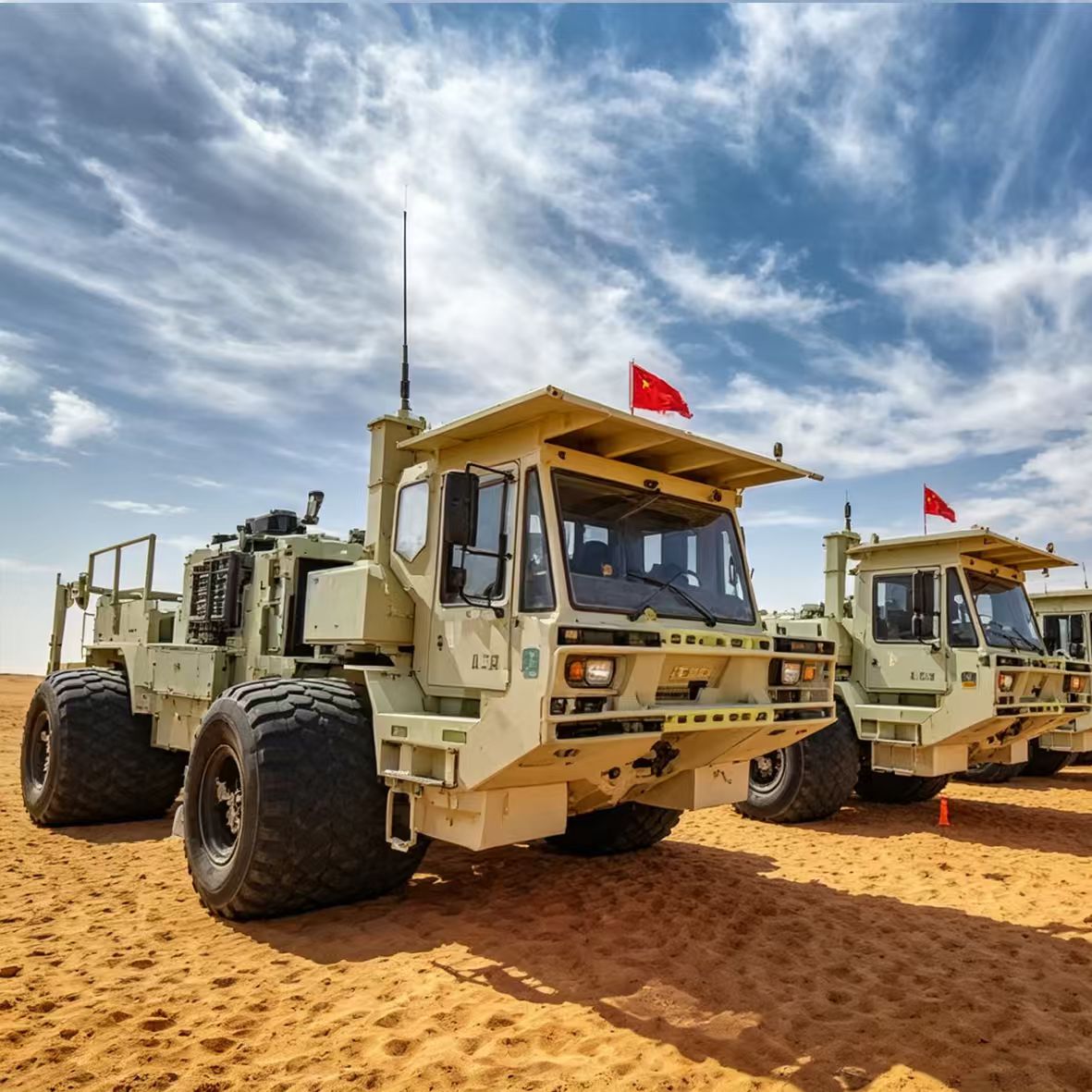
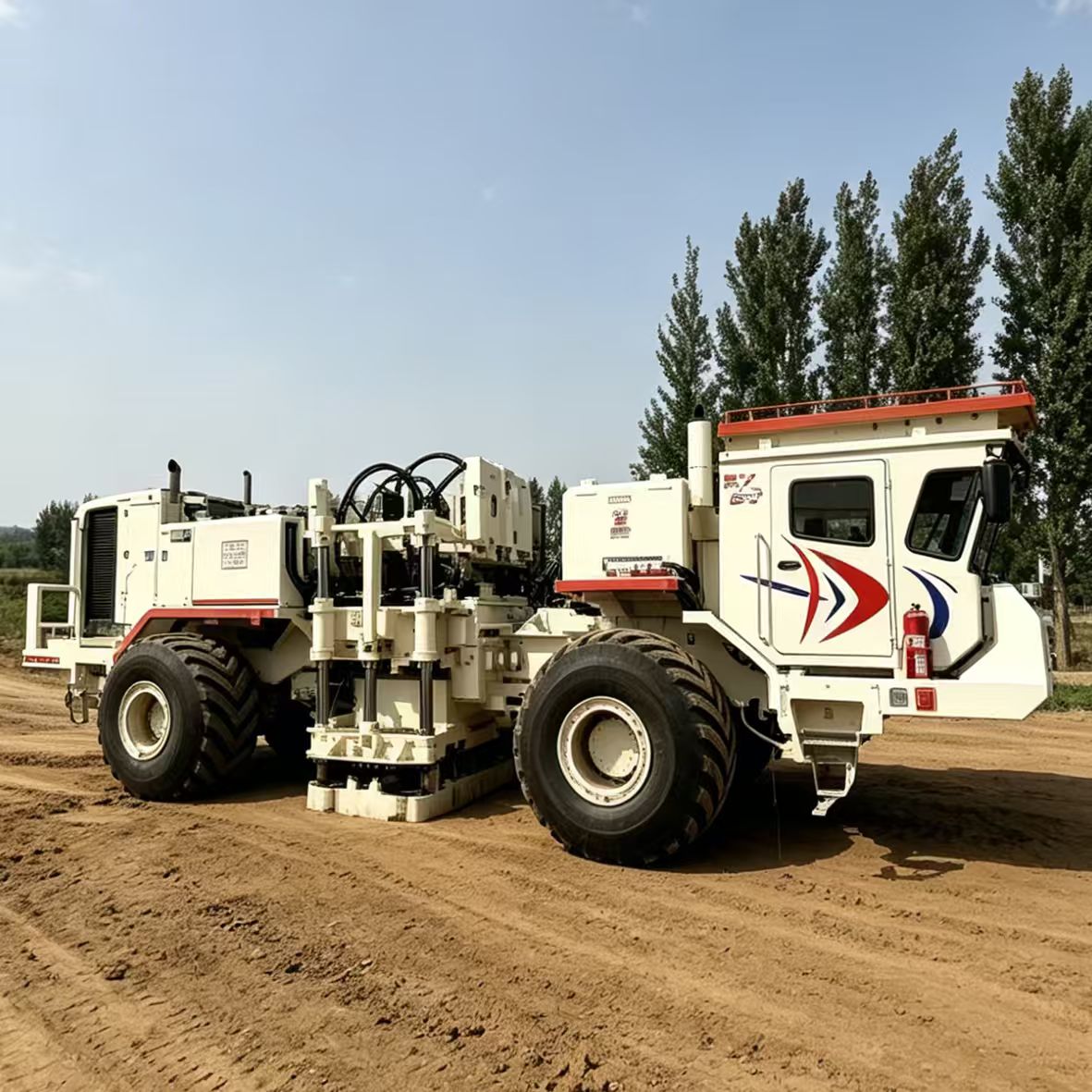
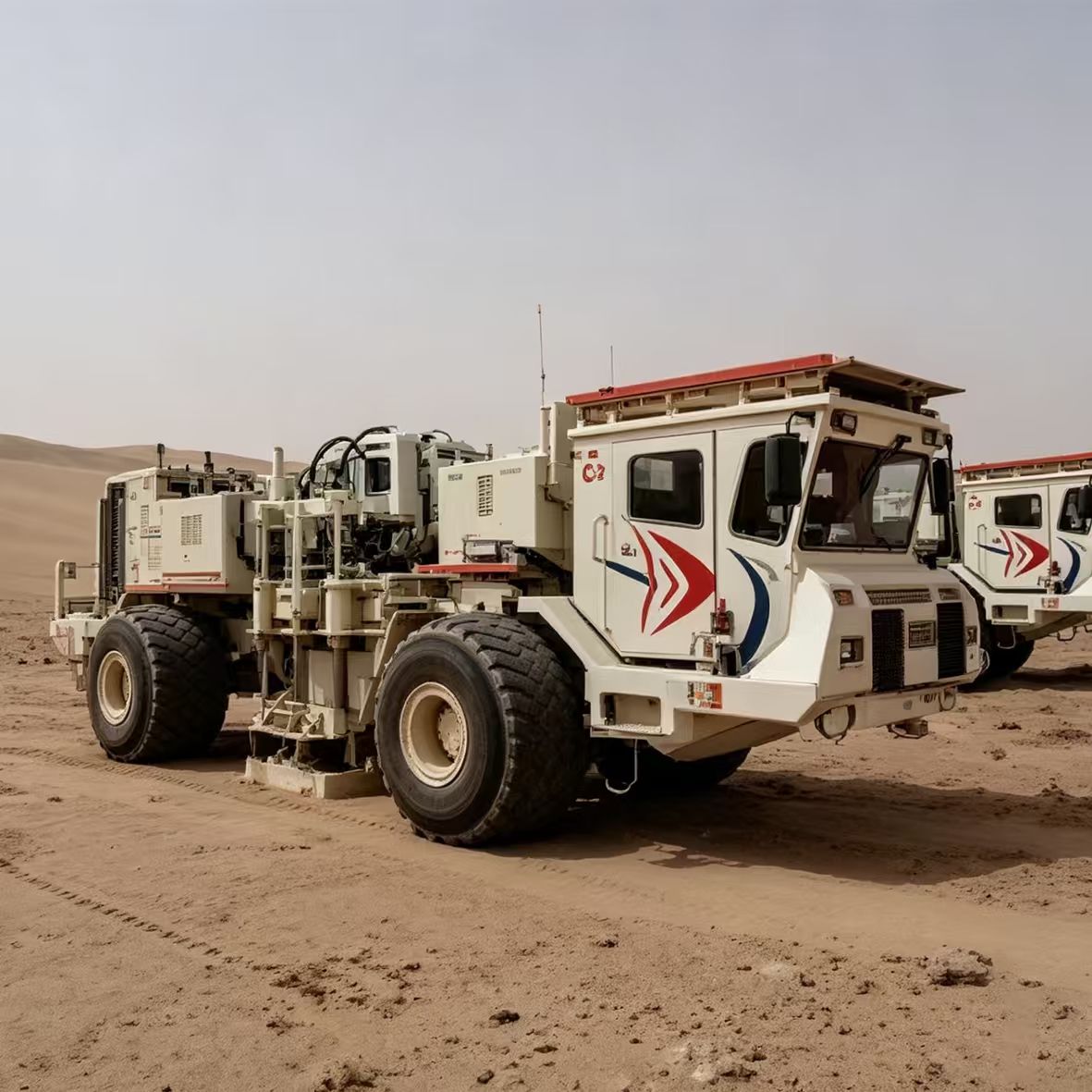
Vibrator Truck
Ultra-low frequency & high-output vibration technology: Strong low-frequency output, excellent deep exploration capability. Electro-hydraulic servo closed-loop control: Precise vibration waveform with low signal distortion. Multi-vibrator synchronous driving technology: Simultaneous vibration of multiple units to improve energy and signal-to-noise ratio. Strong ground coupling technology: The baseplate is pressed tightly against the ground for high energy transfer efficiency. Extreme environment adaptability technology: High and low temperature resistance, dustproof, sandproof and waterproof.
Product Introduction
Types and Characteristics of Equipment
Type
Type: EV80 Series (80,000 lbs / 80-ton class)As the top export model, it is fully adaptable to all scenarios in Russia, the Middle East and Tanzania. It features ultra-low frequency (1–3Hz), strong penetration and imaging capability up to 10,000 meters deep underground, and can withstand -40°C extreme cold, +55°C high temperature as well as sand and wind erosion.
Features
Features:
High output force and strong penetration, capable of exploring deep oil and gas reservoirs. Excellent low-frequency performance and high imaging accuracy. Equipped with a heavy-duty off-road chassis, suitable for deserts, frozen soil, grasslands and Gobi deserts. Resistant to high and low temperatures, sandstorms and severe cold, ideal for extreme environments. Safe and environmentally friendly, no explosives required and reusable for multiple sweeps. Capable of synchronized operation with multiple units, ensuring high efficiency. Mature domestically produced model with high reliability, easy maintenance and cost-effective performance.
Vibrator Truck
Provides controlled seismic waves for underground exploration.
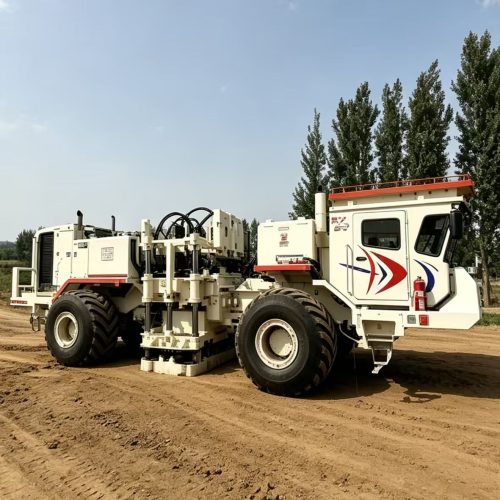
Vibrator Truck
Key vehicle-mounted equipment for land seismic survey.
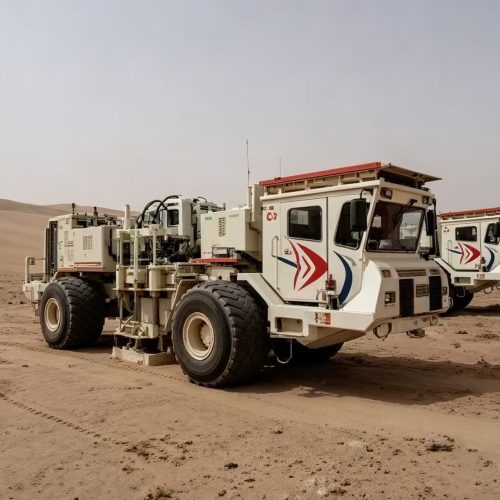
Vibrator Truck
Efficient and eco-friendly energy source for geological detection.
Basic Principles and System Composition
Basic Working Principle
The EV80 emits seismic waves underground through continuous and controlled vibration:
The control system generates a sweep frequency signal (from low frequency to high frequency). The electro-hydraulic servo system drives the vibrator to oscillate up and down at high speed. The vibration baseplate is tightly pressed against the ground, transmitting vibration energy underground. Seismic waves reflect back to the surface when encountering subsurface formation interfaces. Geophones receive the signals to form a subsurface geological image. Summary:Computer controls hydraulics → vibrator transmits energy into the ground → generates seismic waves → reflects and images to locate oil and gas.Overall System Composition
Heavy-duty off-road chassis: 8×8 or 6×6 heavy-duty chassis with high-power engine, providing excellent off-road passability. Vibration system (core working components): vibrator assembly, vibration baseplate, loading hydraulic cylinder, guiding mechanism. Hydraulic system:high-pressure oil pump, servo valve, hydraulic oil tank, cooling and filtering system. Electronic control & operating system: main control computer, synchronous control unit, GPS positioning, operation panel. Auxiliary system: heat dissipation, lubrication, sand-proof sealing, emergency safety devices.
Basic Principles and System Composition
Positioning and Driving: Navigate to the designed shot point via GPS and park accurately.Lowering the Baseplate: Lower the vibration baseplate and apply pressure to ensure tight contact with the ground.System Self-Test and Parameter Setting: Check hydraulic, electronic control and synchronization status; set sweep frequency range and sweep duration.Vibration Sweep: Start vibration and perform continuous sweep at the set frequency to emit seismic waves underground.Synchronous Acquisition: Synchronize time with geophones and seismic recording stations to record reflected signals.Quality Control: Review recorded data; proceed if signals are qualified, or reactivate if unqualified.Retracting and Relocation: Retract the vibration baseplate, drive to the next survey point and repeat operations.Post Data Processing: Perform data stacking, processing and imaging to finally generate subsurface structure maps for oil and gas exploration.
Related products

Multilingual Support
Multilingual professional foreign trade support

One-stop Logistics
Full logistics, customs clearance & shipping arrangement.

Complete Export Docs
Complete export documentation: inspection reports,etc.

On-time delivery excellence
Guaranteed punctual delivery via efficient production & logistics management.

After-sales & Tech Support
Timely after-sales & technical support for overseas clients.